
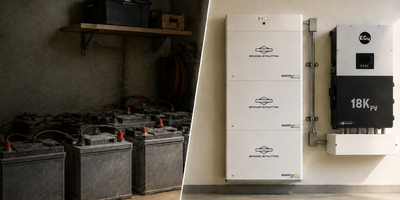
Lead-Acid vs. Lithium Batteries: What Really Matters for Everyday Life
Posted by Signature Solar on 6th Aug 2026
When people think about solar, they usually picture panels on a roof. In reality, the battery is what keeps things running when the sun goes down or the grid goes out.
Whether you’re powering a home, an RV, or a boat, choosing a battery isn’t just about the upfront cost. It affects how dependable your system is, how much upkeep it requires, and how long it will realistically last.
Below is a practical, real-world look at the two most common battery options.
How Long They Last
Lead-Acid Batteries
Lead-acid batteries have been around for a long time. They work, but they wear out fairly quickly when used with solar. In systems that are used regularly, they often need to be replaced every few years.
Lithium Batteries
Lithium batteries are designed for long-term, everyday use. Many last a decade or more before needing replacement.
Why this matters
Longer battery life means fewer disruptions, fewer replacements, and less money spent over time.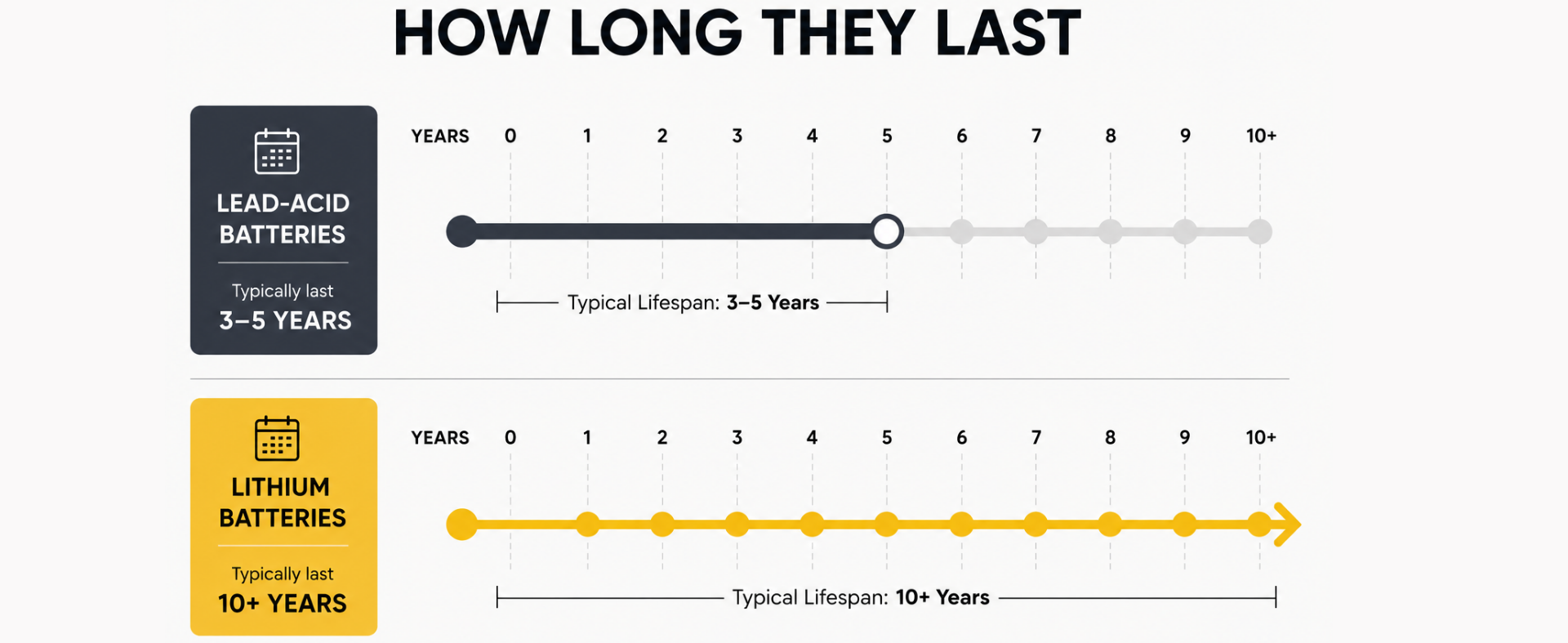
How Much Power You Can Actually Use
Lead-Acid Batteries
With lead-acid batteries, you can only safely use about half of the power they’re rated for. Using more than that can shorten their life.
Lithium Batteries
Lithium batteries allow you to use most of the power they store without causing damage.
What this means day-to-day
With lithium, the power you see on paper is closer to what you actually get. That can mean keeping essentials like lights, refrigeration, and internet running longer during an outage, or enjoying more comfort while traveling.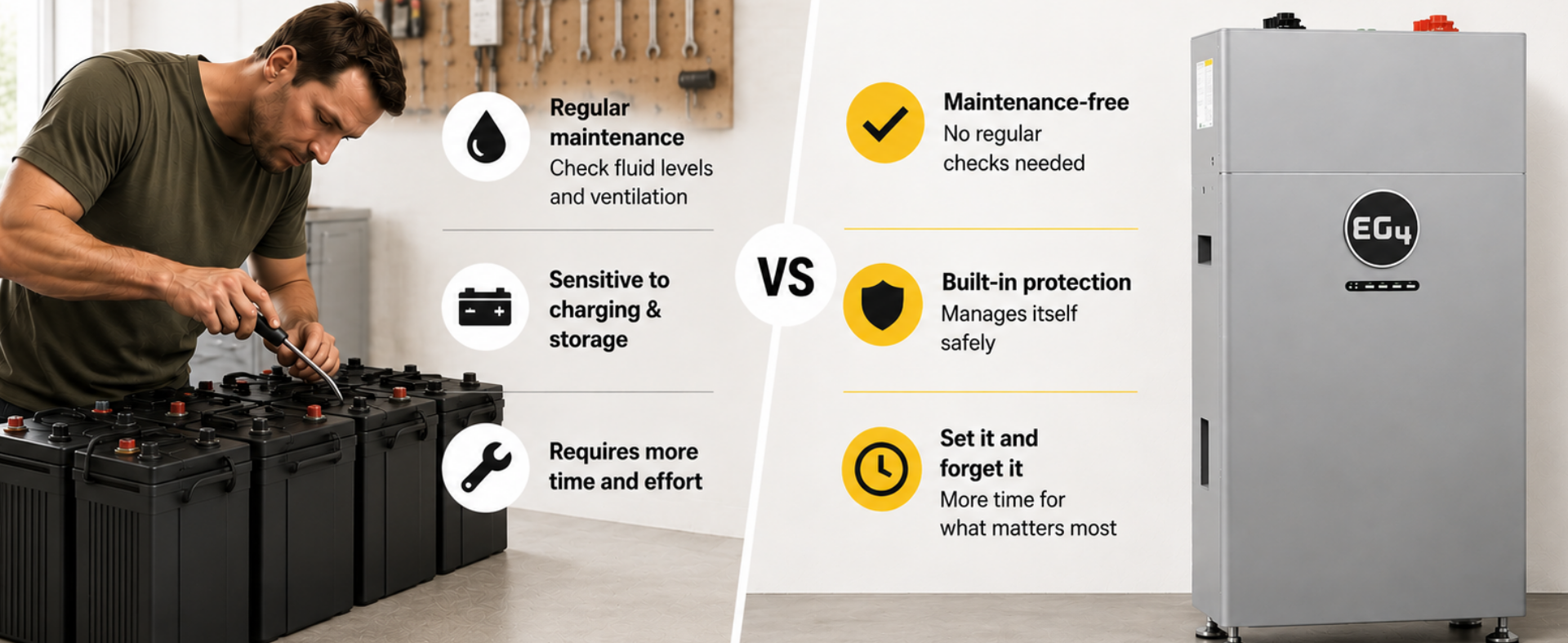
Maintenance and Convenience
Lead-Acid Batteries
Some lead-acid batteries require regular upkeep, like checking fluid levels or ventilation. Even sealed versions are sensitive to how they’re charged and stored.
Lithium Batteries
Lithium batteries are essentially maintenance-free. They don’t require regular checks and are designed to manage themselves safely.
The lifestyle difference
Lithium is a “set it and forget it” option. You don’t have to think about your battery unless you want to.
Space and Weight
Lead-Acid Batteries
These batteries are heavy and take up more space for the amount of power they provide.
Lithium Batteries
Lithium batteries are much lighter and more compact while delivering more usable power.
Why this matters
Less weight and less bulk make installations cleaner and more flexible, especially in RVs, boats, or garages where space matters.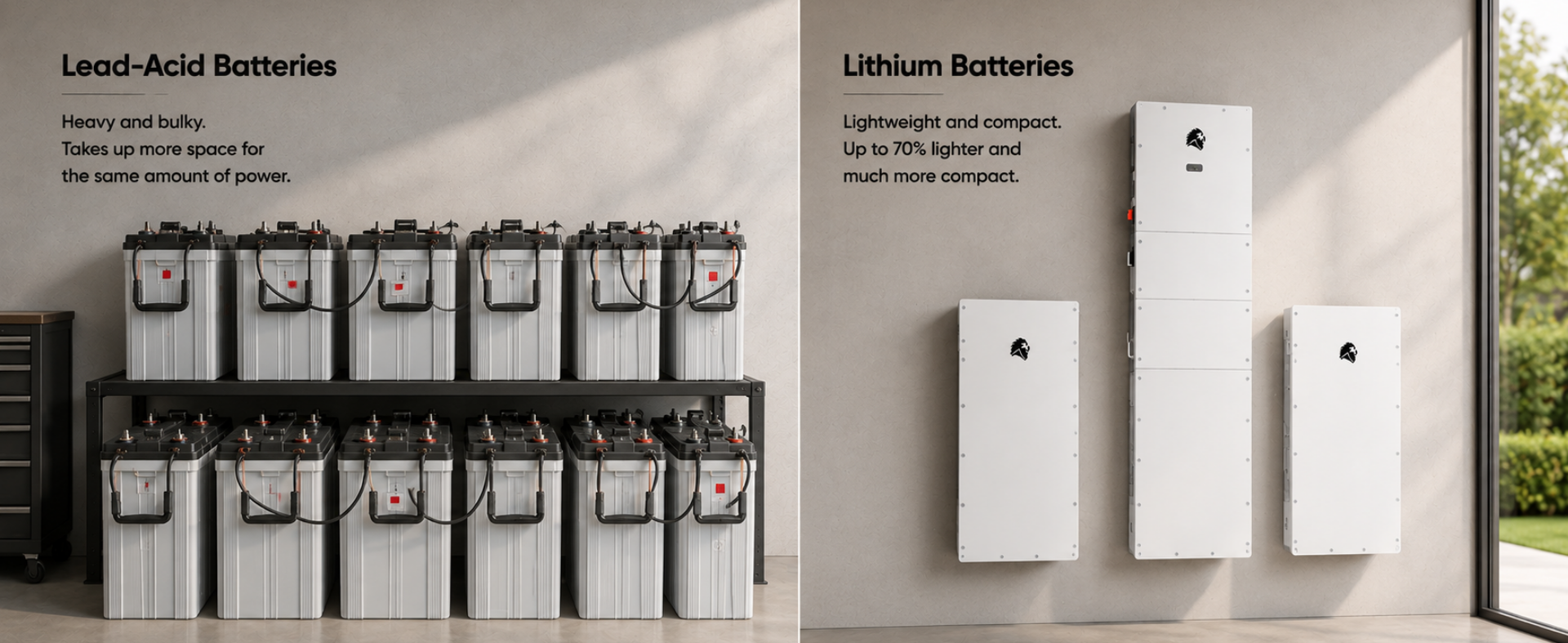
Efficiency and Reliability
Lead-Acid Batteries
Some of the energy your solar panels generate is lost before it can be used.
Lithium Batteries
Lithium batteries store and deliver power much more efficiently, meaning less wasted energy.
In real life
This translates to more consistent power, especially on cloudy days or during shorter winter daylight hours.
Cost Over Time
Lead-Acid Batteries
They usually cost less upfront, but because they don’t last as long and provide less usable power, they often need to be replaced sooner.
Lithium Batteries
They cost more initially, but last much longer and provide more usable energy over their lifetime.
The big picture
For systems that are used regularly, lithium often ends up being the more affordable and less stressful choice over time.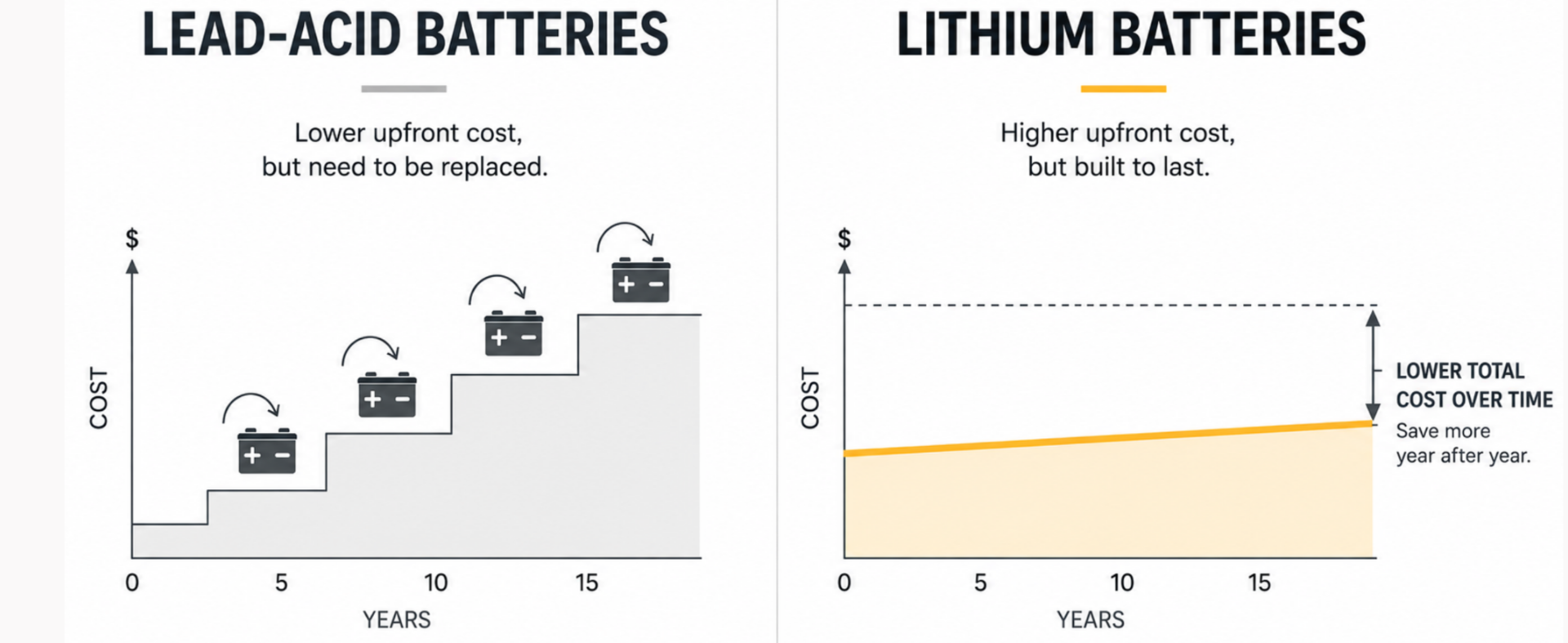
The Bottom Line
Lead-acid batteries can work for basic or short-term backup needs. But they come with tradeoffs: shorter lifespan, less usable power, more upkeep, and more space taken up.
Lithium batteries are built for modern lifestyles. They last longer, require little to no maintenance, provide more usable energy, and fit more easily into everyday living.
For anyone who wants solar to quietly and reliably support their life — at home or on the move — lithium is usually the better long-term choice.